Wallpanel OS
SystemOTA updates, custom F-Droid repository and the start of user testing
A development stage covering a custom OTA server, an F-Droid repository and preparations for user testing.
At that point, the project entered another important stage of development. Over the previous weeks I had been working not only on the system itself, but also on the full update infrastructure, app distribution flow and preparations for a real product deployment.
Custom OTA update mechanism
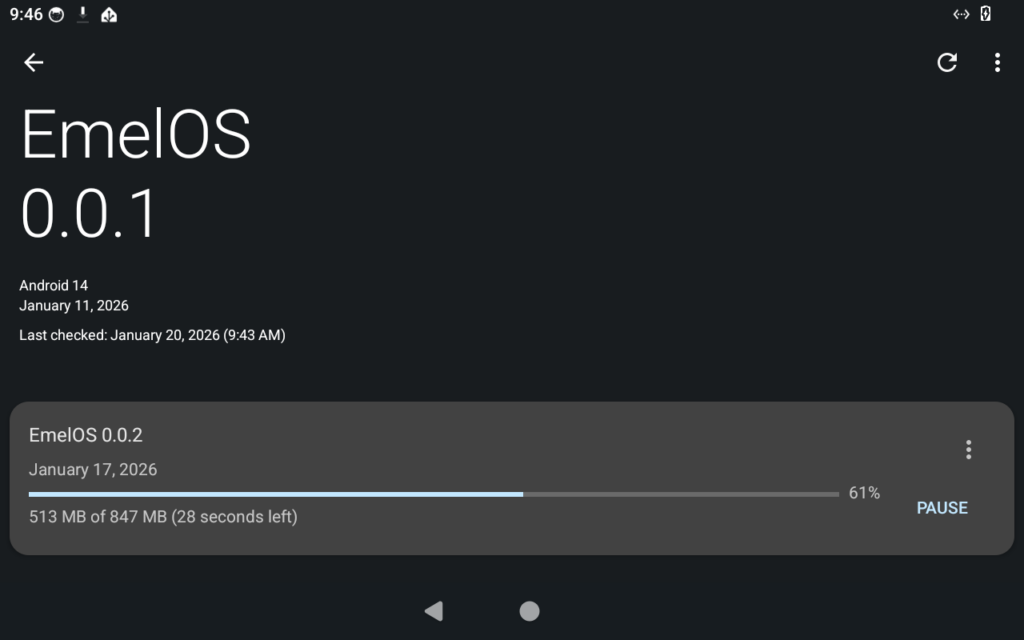
One of the key missing elements was the ability to update the system safely and in a fully controlled way. That is why I launched a custom OTA server where update packages for upcoming system versions are published.
On the Android system side, I implemented a dedicated client app that:
- periodically checks for new versions,
- downloads updates from the emel.tech server,
- verifies their integrity,
- starts the OTA installation process.
The whole flow was designed to deliver fixes quickly while keeping full control over update compatibility with specific hardware.
Thanks to this, Wallpanel OS started behaving like a real updatable product, not a one-off system image.
Custom F-Droid repository and app distribution
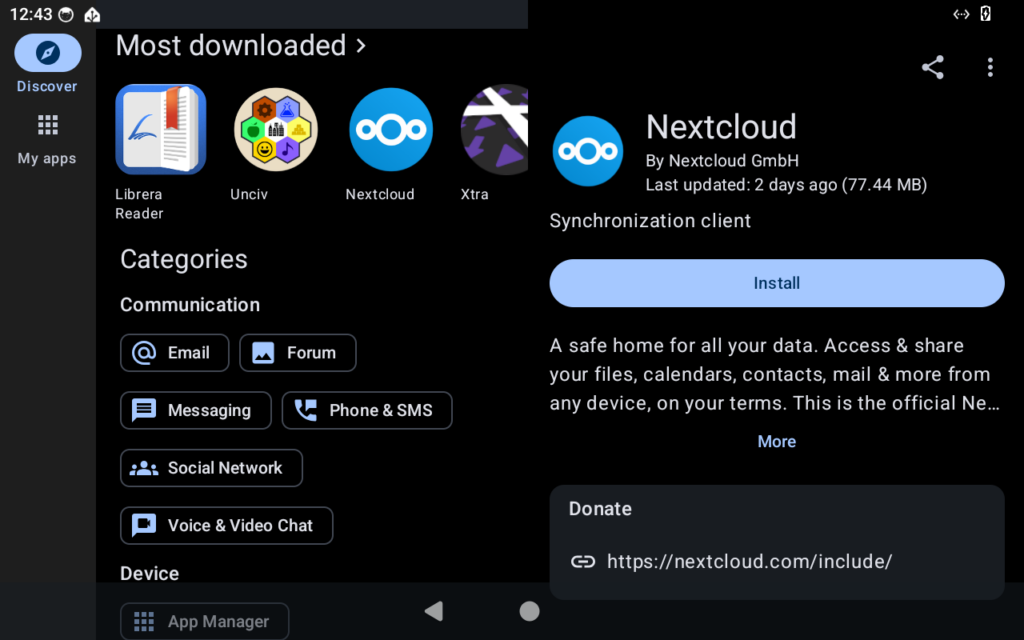
In parallel, I launched a custom F-Droid repository where I publish:
- modified app versions,
- apps dedicated to Wallpanel OS,
- system components developed as part of the project.
The repository was integrated directly with the system:
- the F-Droid client is preinstalled,
- the emel.tech repository is configured by default,
- the user gets a consistent and secure app update channel.
This approach gives full independence from Google Play, makes it possible to react quickly to bugs and keeps control over the app versions used in the wall panel environment.
Moving into user testing
Alongside the technical work, I also started organizing the formal and operational side of the project:
- adapting business processes to tax and legal requirements,
- preparing the process for selling electronic devices,
- organizing documentation and user communication.
As a result, the project entered a testing phase. I contacted people who had previously signed up for the test list in order to:
- verify real usage scenarios,
- collect feedback about stability and UX,
- refine the system before wider availability.
This was an important moment: the project was no longer tested only in home conditions, but also in real installations.